Serene ancient forest with tall trees, dappled morning light filtering through dense canopy, mossy ground, deep shadows creating dramatic cinematic depth and organic texture
Educational Resource

A Comprehensive Guide to Natural Dietary Components for Men

Prowlex is an independent knowledge resource dedicated to exploring the scientific context of vitamins, minerals, and plant-derived compounds relevant to men's nutritional understanding. All content is strictly educational and informational.

Explore the Compendium Our Philosophy
12+ Compound Profiles
6 Core Knowledge Areas
100% Educational Content
01 — Foundation

Understanding Essential Nutrients

A structured overview of the fundamental categories of dietary components, their general biological roles, and their significance within the broader context of human nutrition.

01

Vitamins

Vitamins are organic micronutrients that the body requires in small quantities to sustain normal physiological processes. They are broadly categorised as fat-soluble or water-soluble, each group differing in how they are absorbed and stored within the body's tissues and systems.

Explore further
02

Minerals

Minerals are inorganic elements that play fundamental structural and regulatory roles throughout the body. From the formation of bone tissue to the regulation of nerve impulse transmission, minerals participate in a vast range of biological functions at both the cellular and systemic level.

Explore further
03

Amino Acids

Amino acids are the fundamental building blocks of proteins, which are essential to virtually every structural and functional process in the human body. The distinction between essential and non-essential amino acids reflects whether the body can synthesise them independently or must obtain them through dietary intake.

Explore further
04

Fatty Acids

Fatty acids, particularly those classified as omega-3 and omega-6 polyunsaturated fats, are essential components of cell membranes and are involved in the regulation of numerous physiological signalling pathways. Dietary sources such as oily fish, flaxseed, and walnuts provide these compounds in their most bioavailable forms.

Explore further
05

Phytonutrients

Phytonutrients, also referred to as phytochemicals, are naturally occurring compounds found in plant-based foods. Substances such as flavonoids, carotenoids, and polyphenols have been the subject of considerable scientific investigation regarding their general roles in supporting cellular integrity and overall biological balance.

Explore further
06

Macronutrients

Carbohydrates, proteins, and fats collectively form the macronutrient triad that provides the body with its primary energy substrates and structural raw materials. Understanding the proportional balance of these macronutrients within a dietary pattern is central to appreciating the principles of nutritional science.

Explore further
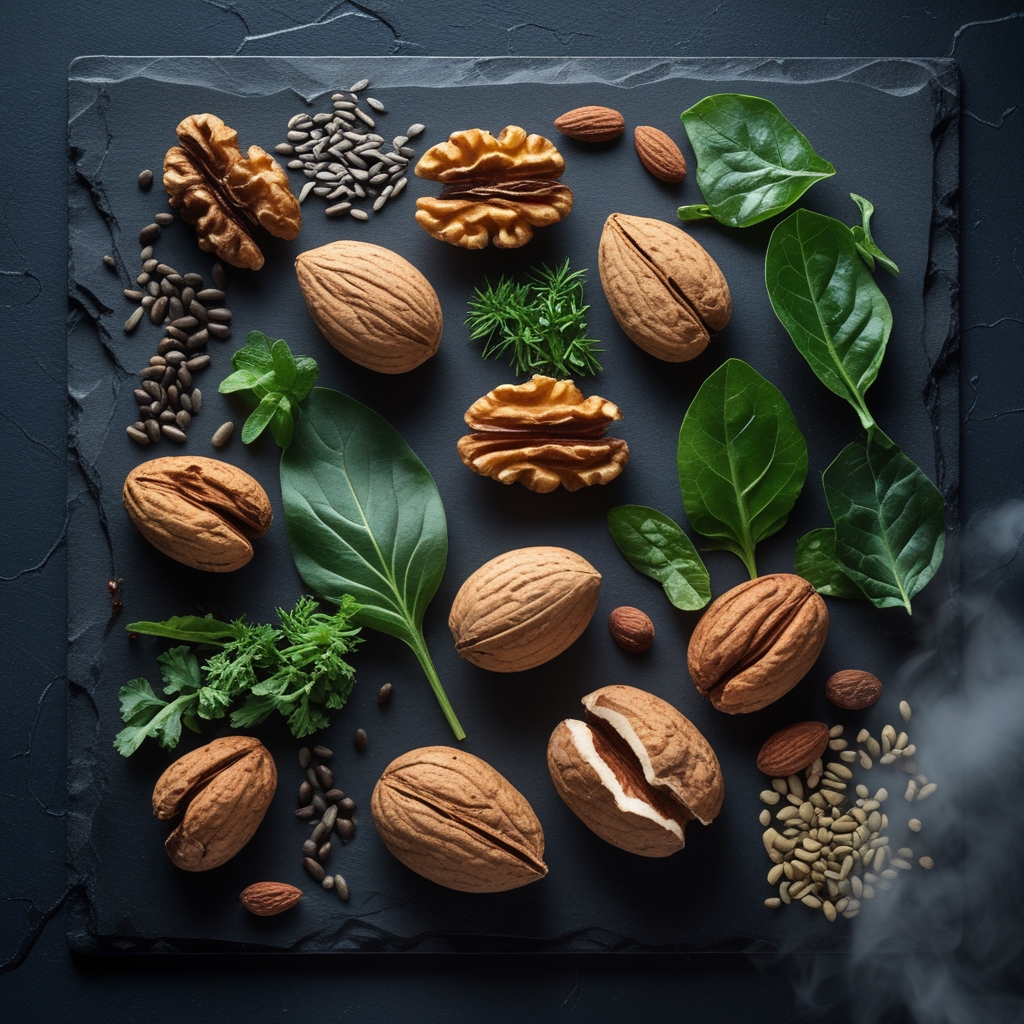
Overhead flat lay of a diverse arrangement of whole natural foods including walnuts, almonds, seeds, dried legumes, fresh herbs and leafy greens on a dark slate surface with dramatic directional lighting
02 — Micronutrients

The Role of Vitamins and Minerals

An exploration of how vitamins and minerals interact with fundamental bodily systems, drawing upon recognised principles of nutritional biochemistry.

Fat-Soluble Vitamins

Vitamins A, D, E and K

Fat-soluble vitamins are absorbed alongside dietary fats and are stored in the body's fatty tissues and liver, which means they remain available over longer periods compared to their water-soluble counterparts. Vitamin A is widely recognised for its role in supporting normal vision, immune function, and cell differentiation. Vitamin D, synthesised primarily in the skin upon exposure to sunlight, is integral to the regulation of calcium absorption and bone metabolism.

Vitamin E acts as a significant antioxidant within cell membranes, while Vitamin K is essential for the normal coagulation of blood and contributes to bone protein synthesis. The balance of these vitamins within a diet reflects the broader principle of nutritional sufficiency.

  • Stored in liver and adipose tissue for extended availability
  • Absorbed via the lymphatic system alongside dietary lipids
  • Involved in cellular signalling and gene expression regulation
Golden afternoon sunlight streaming through a gap in tall forest trees onto a woodland path with lush green undergrowth, warm natural light creating a sense of vitality and organic depth
Water-Soluble Vitamins

The B-Vitamin Complex and Vitamin C

The B-vitamin group comprises eight distinct water-soluble vitamins, each with specific and complementary roles in energy metabolism, the biosynthesis of neurotransmitters, and the maintenance of healthy red blood cell production. Thiamine (B1), riboflavin (B2), and niacin (B3) are foundational to the process by which cells convert macronutrients into usable energy.

Folate (B9) and cobalamin (B12) are particularly significant for the synthesis and repair of DNA and are important in homocysteine metabolism. Vitamin C, beyond its well-established role in immune function, is a vital component in collagen synthesis and serves as a powerful reducing agent that supports other antioxidant systems within the body.

  • Regularly excreted and must be consistently replenished through diet
  • Function as coenzymes in hundreds of enzymatic reactions
  • Levels are sensitive to dietary choices and food preparation methods
Golden afternoon sunlight streaming through a gap in tall forest trees onto a woodland path with lush green undergrowth, warm natural light creating a sense of vitality and organic depth
03 — Plant Compounds

Exploring Plant-Derived Compounds

Three notable plant-derived compounds examined through the lens of their historical context, traditional applications, and general characterised properties — without reference to specific outcomes or health claims.

Fresh turmeric root and ground turmeric powder on a dark weathered wooden surface with dramatic side lighting revealing rich golden orange textures and a few green turmeric leaves in background
Rhizome Extract

Curcumin

Derived from the rhizome of Curcuma longa, curcumin is the principal bioactive polyphenol in turmeric and has been central to Ayurvedic and traditional Chinese botanical practices for over three millennia. Contemporary nutritional science continues to investigate its interaction with various cellular signalling pathways, noting its notable but limited oral bioavailability in standard form.

Close-up macro photograph of fresh ginger root cross-sections showing fibrous internal texture and warm golden flesh with moisture droplets on a dark slate surface under cinematic diffused studio light
Root Compound

Ginger

Zingiber officinale has occupied a prominent position in traditional botanical knowledge across South and East Asian cultures for thousands of years, valued for its complex chemical composition including gingerols and shogaols. These pungent compounds have been extensively characterised within the scientific literature for their general biological properties and antioxidant activity in in-vitro models.

Overhead view of fresh green tea leaves floating in a minimalist ceramic bowl with clear pale green liquid, morning soft light casting gentle shadows, conveying purity and botanical complexity
Catechin Source

Green Tea Extract

Camellia sinensis leaves, when minimally processed, retain their complement of catechins — most notably epigallocatechin gallate (EGCG). This compound has been a subject of sustained academic interest for its structural properties as a polyphenol and its characterised antioxidant capacity, making green tea extract a well-documented subject in the field of nutritional biochemistry and botanical research.

04 — Context

Lifestyle Factors for Well-being

Nutritional science does not exist in isolation. The broader context of an individual's daily lifestyle — encompassing sleep, physical activity, dietary patterns, and stress management — forms the foundational landscape within which all dietary components interact.

This section presents an informational overview of the key lifestyle dimensions most frequently referenced in nutritional and well-being literature, providing context for understanding how dietary components function within the full scope of daily living.

This information is presented purely for educational and contextual purposes. Individual circumstances vary considerably; no content on this page constitutes personal guidance.

A balanced dietary pattern is one that provides adequate quantities of all essential macronutrients and micronutrients relative to an individual's physiological requirements. Nutritional frameworks such as the Eatwell Guide published by Public Health England emphasise the importance of variety, proportionality, and moderation across the major food groups.

The concept of dietary diversity — consuming a wide range of whole foods including vegetables, fruits, whole grains, legumes, and lean proteins — is consistently associated in nutritional literature with comprehensive micronutrient coverage. This diversity is particularly relevant when considering the broad spectrum of vitamins and minerals discussed elsewhere on this resource.

Sleep represents a period of active physiological restoration. During sleep, numerous hormonal regulation processes, cellular repair mechanisms, and neurological consolidation activities occur. Nutritional science has long recognised that certain micronutrients — including magnesium and several B-vitamins — participate in pathways associated with normal neurological function and therefore intersect meaningfully with sleep quality research.

The relationship between diet and sleep is bidirectional: the foods consumed throughout the day can influence sleep architecture, while the duration and quality of sleep in turn affects appetite regulation, energy metabolism, and the overall efficiency of nutrient utilisation at the cellular level.

Regular physical activity alters the body's demand for specific nutrients. For individuals engaged in regular exercise, the turnover of certain minerals such as zinc and magnesium may increase, and the requirements for antioxidant compounds may be elevated due to the increased metabolic activity and associated generation of reactive oxygen species during intense exertion.

The spectrum of physical activity — from gentle walking and yoga to structured strength and cardiovascular training — represents an important variable in understanding how dietary intake interacts with the body's energy and recovery systems. This educational resource does not advocate for any specific exercise regimen.

Water is an essential nutrient that serves as the medium for virtually all metabolic processes within the body. It facilitates the transport of water-soluble vitamins, aids in the regulation of core body temperature, supports renal clearance of metabolic byproducts, and is fundamental to maintaining the structural integrity of cells and tissues.

Electrolyte minerals, including sodium, potassium, and chloride, play a central role in fluid balance regulation. The concept of optimal hydration is therefore not merely about water volume, but encompasses the broader relationship between fluid intake and mineral balance.

The physiological stress response involves the activation of the hypothalamic-pituitary-adrenal axis and results in the release of cortisol and other stress-related hormones. This process has documented nutritional implications: sustained activation of the stress response is associated in the research literature with increased utilisation of certain B-vitamins, vitamin C, and magnesium, as these compounds participate in the enzymatic pathways involved in stress hormone synthesis and metabolism.

Understanding the intersection between stress physiology and nutritional requirements is an active area of academic research. This educational resource presents these findings in a purely informational capacity.

05 — Historical Perspective

Natural Substances in Human History

A historical overview of how different civilisations and eras have understood and utilised natural dietary substances, providing cultural and scholarly context for contemporary nutritional science.

c. 3000 BCE

Ancient Herbal Traditions

Early Sumerian, Egyptian, and Chinese texts document the systematic cataloguing of plant-based substances and their observed relationships to human health. The Ebers Papyrus of ancient Egypt references over 850 plant preparations used in daily life.

c. 400 BCE

Classical Greek Nutritional Philosophy

Hippocrates and his school articulated the foundational principle that food and its properties are intimately connected to bodily constitution. The concept of dietary balance as a determinant of general well-being became a cornerstone of classical medical philosophy.

c. 1000 CE

Islamic Golden Age Botany

Scholars such as Ibn Sina (Avicenna) produced encyclopaedic works synthesising Greek, Persian, and Indian botanical knowledge. The Canon of Medicine systematically described hundreds of plant-derived substances and their observed properties, influencing European and Asian traditions for centuries.

16th–18th Century

European Herbal Renaissance

The development of printed herbals, including those by Dodoens and Gerard, democratised botanical knowledge across Europe. Trade routes expanded the availability of spices and plant extracts from Asia and the Americas, fundamentally reshaping European dietary and botanical understanding.

Early 20th Century

Discovery of Essential Vitamins

The isolation and identification of individual vitamins — beginning with Casimir Funk's work on "vital amines" in 1912 and culminating in the structural elucidation of most vitamins by the mid-20th century — transformed the understanding of essential micronutrients from empirical observation to biochemical science.

Late 20th Century

Nutritional Epidemiology Emerges

Large-scale population studies and the establishment of national dietary reference values formalised the scientific understanding of nutritional requirements. Research into phytonutrients and the Mediterranean dietary pattern initiated a renewed scientific interest in whole-food plant-based dietary approaches.

Present Day

Nutritional Genomics and Systems Biology

Contemporary nutritional science employs genomic, metabolomic, and systems biology approaches to understand how individual dietary components interact with human biology at the molecular level, representing a profound deepening of the knowledge base established across millennia of observation and inquiry.

06 — Scientific Context

Scientific Principles of Dietary Elements

Close-up macro photograph of fresh green herbs including rosemary and thyme sprigs arranged on a dark slate surface with intense directional studio lighting highlighting botanical detail and texture

Bioavailability Basics

Bioavailability refers to the proportion of an ingested nutrient that is ultimately absorbed and enters systemic circulation in a form capable of being utilised by the body. It is not a fixed property of any given compound; rather, it is a dynamic variable influenced by the food matrix, the form of the nutrient, co-ingested dietary components, and individual physiological characteristics such as gut microbiome composition and enzymatic activity.

For example, the bioavailability of non-haem iron (found in plant foods) is considerably lower than that of haem iron (found in animal foods) and can be significantly modulated upwards or downwards by the simultaneous consumption of vitamin C or polyphenols, respectively. Such nutrient-nutrient interactions are a central subject of contemporary dietary research.

  • Form of the nutrient (crystalline vs. food-matrix-bound)
  • Gastric pH and digestive enzyme activity
  • Presence of absorption enhancers or inhibitors
  • Individual gut microbiome and mucosal integrity
  • Age-related changes in absorptive capacity

Nutrient Interactions

Nutrients rarely function in isolation within a biological system. The concept of nutrient synergy describes the phenomenon whereby the combined presence of two or more dietary components produces a more significant biological response than either compound would elicit independently. Vitamin D and calcium represent a well-characterised example: vitamin D facilitates the active transport of calcium across the intestinal epithelium, meaning that calcium intake without adequate vitamin D may result in substantially reduced absorption.

Conversely, certain nutrients exhibit antagonistic relationships. High intakes of zinc, for instance, can competitively inhibit the intestinal absorption of copper, as these two minerals share common absorptive transport proteins. Understanding these interactions provides a more nuanced and realistic picture of how dietary composition affects nutritional status.

Oxidative Balance and Antioxidants

Reactive oxygen species (ROS) are generated as natural byproducts of cellular energy metabolism. Under normal circumstances, endogenous antioxidant systems — including superoxide dismutase, catalase, and glutathione peroxidase — neutralise these reactive compounds. Dietary antioxidants, including vitamins C and E, selenium, and numerous polyphenols, support and complement these endogenous defence mechanisms.

The concept of oxidative balance is therefore one of dynamic equilibrium rather than the simple elimination of all reactive species. Some level of ROS generation is a necessary component of normal cellular signalling, and nutritional science approaches this topic with appropriate nuance.

Gut Microbiome and Dietary Components

The human gut microbiome — comprising trillions of microbial organisms resident in the gastrointestinal tract — plays a profound role in nutritional science. Certain dietary fibres serve as substrates for microbial fermentation, yielding short-chain fatty acids that influence host cellular metabolism. Conversely, the microbiome influences the bioavailability of polyphenols and other complex plant compounds through its biotransformation activities.

07 — Reference

Frequently Asked Questions

Informational answers to common questions about natural dietary components, nutritional science, and the scope of this educational resource.

What are macronutrients and why are they important?

Macronutrients — carbohydrates, proteins, and fats — are the three primary categories of dietary components that provide the body with energy (measured in kilocalories) and the raw structural materials necessary for cellular maintenance and growth. Their importance lies both in their energy-providing function and in the specific roles each plays: proteins supply amino acids for tissue synthesis, fats provide fatty acids for membrane integrity and signalling, and carbohydrates serve as the preferred fuel source for the central nervous system and high-intensity physical activity.

Are all vitamins similar in their function?

No. While vitamins share the characteristic of being essential organic micronutrients, they are a chemically diverse group with highly distinct functions. The 13 recognised essential vitamins each occupy unique biochemical roles: some act as coenzymes, others as antioxidants, and several (notably Vitamin D) function more similarly to hormones. Their distinction between fat-soluble and water-soluble categories also fundamentally affects how they are absorbed, transported, stored, and excreted within the body.

What is the difference between essential and non-essential amino acids?

The human body is capable of synthesising eleven of the twenty standard amino acids required for protein construction; these are termed non-essential or dispensable. The remaining nine — histidine, isoleucine, leucine, lysine, methionine, phenylalanine, threonine, tryptophan, and valine — cannot be synthesised in adequate quantities by the body and must therefore be obtained from dietary sources. These are classified as essential or indispensable amino acids. Foods containing all nine essential amino acids in sufficient proportions are termed complete proteins.

What role do plant compounds play in nutritional science?

Plant-derived compounds, or phytonutrients, represent a vast and chemically diverse category of substances that are produced by plants for their own biological purposes — including pigmentation, defence against pathogens, and attraction of pollinators. When consumed by humans, many of these compounds interact with biological systems in ways that have been the subject of considerable scientific investigation. Their study forms a major area of contemporary nutritional research, though the extrapolation of in-vitro findings to definitive human outcomes requires careful scientific evaluation.

How does the gut microbiome relate to nutrient absorption?

The gut microbiome influences nutrient absorption through several mechanisms. Microbial fermentation of dietary fibre produces short-chain fatty acids that serve as energy substrates for colonocytes and influence metabolic signalling. Certain gut bacteria are involved in the synthesis of Vitamin K2 and some B-vitamins. Additionally, the microbiome biotransforms complex polyphenols — many of which are not directly absorbed — into smaller metabolites that can be absorbed and exert biological effects at systemic level. Microbiome composition is therefore recognised as an important variable in individual nutritional status.

What does "dietary reference value" mean?

Dietary Reference Values (DRVs) are a set of nutritional recommendations developed by scientific advisory bodies, including the Scientific Advisory Committee on Nutrition (SACN) in the United Kingdom. They represent estimates of the intake levels sufficient to meet the requirements of the majority of a defined healthy population group, rather than the needs of any individual. DRVs include the Estimated Average Requirement (EAR), the Reference Nutrient Intake (RNI), and the Lower Reference Nutrient Intake (LRNI), each serving a distinct scientific and policy purpose.

Does this resource provide personal dietary guidance?

No. Prowlex is an independent educational resource presenting general scientific and contextual information about natural dietary components. All content is intended for informational and educational purposes only. This website does not provide, and is not a substitute for, individual dietary advice, nutritional consultation, or any form of health-related guidance from a qualified professional. Individuals with specific dietary concerns are encouraged to consult a registered dietitian or appropriately qualified healthcare professional.

What are polyphenols and where are they found?

Polyphenols are a structurally diverse family of plant secondary metabolites characterised by the presence of multiple phenol groups. They represent one of the most abundant classes of phytonutrients in the human diet, found particularly in berries, tea, coffee, dark chocolate, olive oil, and a wide variety of vegetables and legumes. Subclasses include flavonoids (such as quercetin and catechins), stilbenes (such as resveratrol), lignans, and phenolic acids, each with distinct chemical structures and characterised biological properties.

Continue Exploring

Continue Your Journey of Understanding

The Prowlex knowledge resource exists to make scientific information about natural dietary components accessible, clearly structured, and contextually grounded. Explore the full compendium of natural elements or learn more about our informational philosophy.

Explore Concepts Discover Our Philosophy
Educational content only. No promises of outcomes.